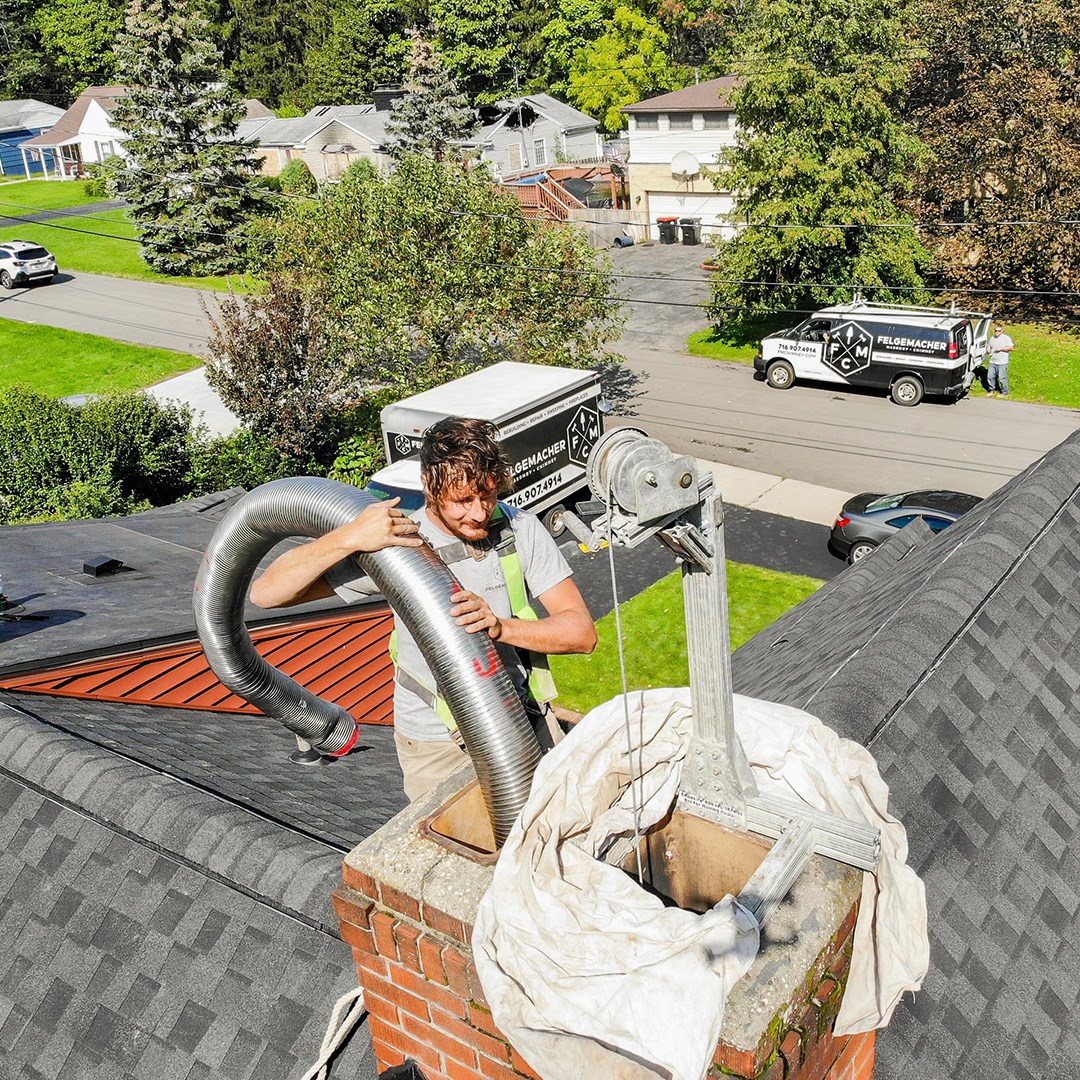
Surrounded on three sides by water, the waterfront town of Irondequoit is a rural oasis with easy access to urban amenities throughout the Greater Rochester area. However, the town's older homes were often built with terra-cotta chimney liners. Eventually, these clay tiles crack and degrade with age, moisture, and exposure to heat and acidic combustion gases, posing a serious fire and safety hazard.
At Felgemacher, we have over 60 years of experience helping upstaters preserve their homes' historic architecture, reduce the risk of fire and carbon monoxide exposure, and improve heating efficiency through our expert chimney relining services.
Types of Chimney Liners
A chimney liner contains the heat and combustion byproducts in the flue, protecting the surrounding masonry walls. There are several kinds of liners, but the most common types in Western New York include:
- Terra Cotta Tiles: The most common due to their lower cost. However, they are prone to cracking due to extreme temperature fluctuations, excessive moisture, and foundation settlement.
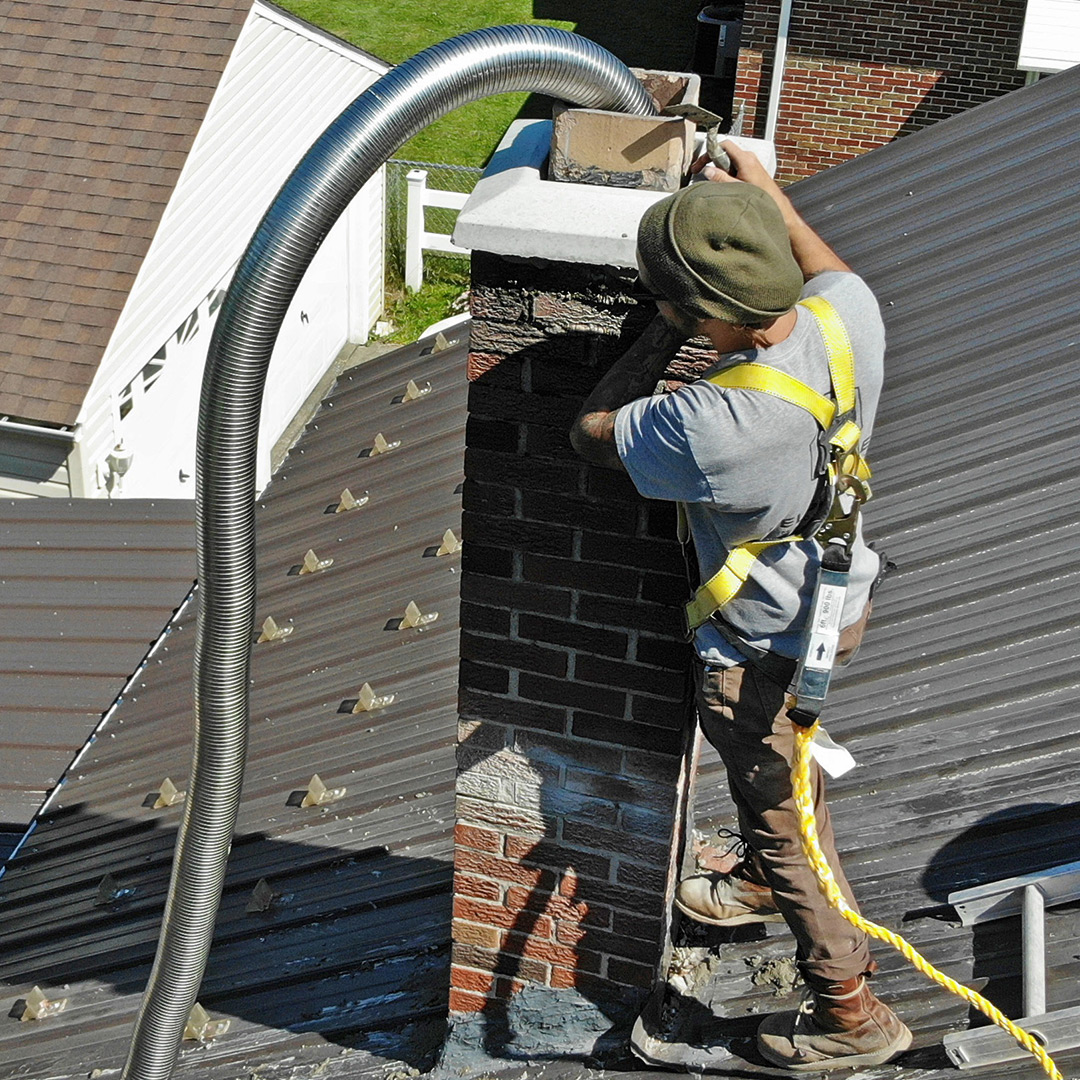
- Stainless Steel Liners: Flexible or rigid metal tubes that provide a durable, seamless path for exhaust to exit at the top of the stack. They are water- and rust-resistant, are compatible with multiple fuel sources, and are an excellent solution for relining both older and newer chimneys.
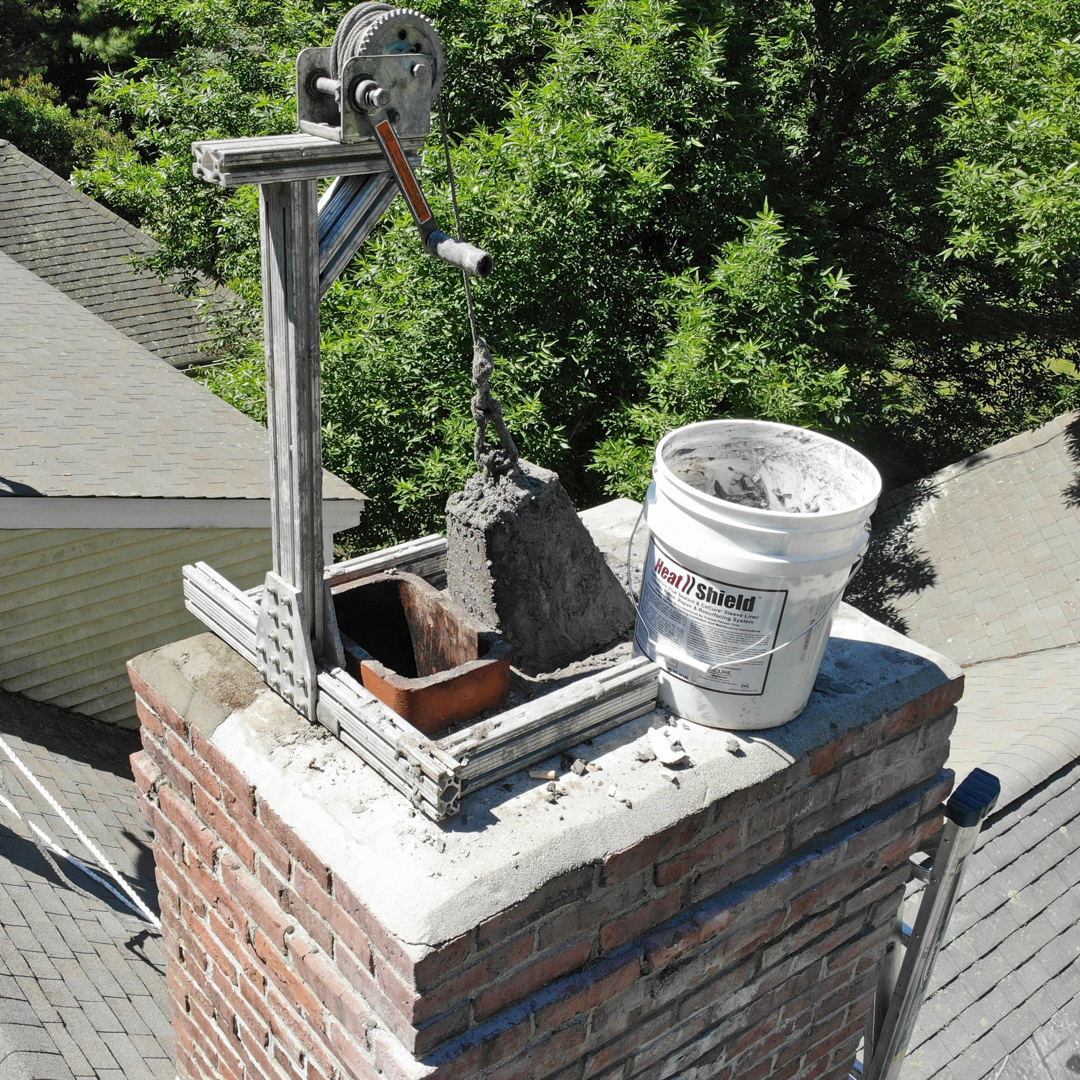
- Cast-in-Place: A cement-like mixture is poured into the flue, forming a smooth, seamless, heat-resistant surface.
Signs Your Irondequoit Chimney May Need Relining
An annual chimney inspection can often catch minor liner issues before they become problematic. However, you should call Felgemacher for an immediate inspection whenever you notice:
- Debris in the firebox: Shards of clay or broken pieces of tile on the floor of your firebox.
- Drafting issues: Smoke backing up into the room instead of drawing smoothly up the chimney.
- Creosote buildup: A sticky, highly flammable, tar-like material forming on the interior walls, on the damper, or in the firebox.
- Unusual odors: A strong, pungent campfire smell lingering in your living space, even though you're not using the fireplace.
Dangers of a Cracked or Failing Chimney Liner
Cracks and gaps from missing or broken tiles expose the surrounding masonry to heat and flames. The transfer of this heat, which can exceed 800°F, from the flue to nearby combustible materials such as wood framing, the attic, and the roof deck is the biggest danger and a common cause of devastating house fires in Western New York.
Chimney Relining Solutions:
Depending on the condition of your masonry and the type of heating appliance you use, we typically recommend two highly effective relining methods:
HeatShield®
HeatShield is a specialized cerfractory sealant that restores the integrity of your chimney's existing liner. By applying a custom-formulated coating to the interior walls, we can quickly and easily fill gaps and seal cracks, creating a smooth, seamless surface that resists heat, moisture, and rust. The HeatShield system is entirely safe for relining historic and older homes, allowing you to preserve the original masonry structure without the invasive process of tearing out the old clay tiles.
Stainless Steel Liner
For chimneys with severe structural damage or those built without a liner, we install UL-listed stainless-steel liners. We highly recommend installing stainless steel liners in homes with unlined chimneys because they provide a seamless, impenetrable barrier against heat and gases. These rigid or flexible liners are correctly sized for your specific heating appliance, improving draft and maximizing efficiency.
Chimney Relining Benefits
Relining your chimney provides immediate benefits for your home and family:
- Fire Safety: Eliminates the risk of heat transfer to combustible home framing and seals cracks to prevent carbon monoxide leaks.
- Heating Efficiency: A properly sized liner creates a stronger draft, so your wood burns cleaner, hotter, and with less fuel wasted.
- Reduces Creosote: Smooth, modern liners limit the surface area where sticky creosote can build up, directly reducing the risk of a chimney fire.
- Code Compliance: Ensures your heating system meets current New York State Mechanical Codes and NFPA standards, which are often required when selling your home or installing a new appliance, such as a fireplace insert.
Call Felgemacher for Expert Chimney Relining in Irondequoit, NY
Protect your home and family while improving your fireplace's efficiency with chimney relining from Felgemacher's certified professionals. Call us or fill out the form on our website to schedule an inspection or request a free estimate. We proudly serve Monroe County and Greater Rochester, including Maplewood Historic District, West Irondequoit, and Penfield, NY.