What’s the Difference Between a Fireplace Damper and a Chimney Damper?
Most people know that dampers play an important role in a fireplace’s operation. What some people don’t know is that there are actually two types of dampers that have some similarities and one key difference.
Felgemacher of Rochester, NY, would like to share a little about the two damper styles and when you need to have your damper repaired or replaced.
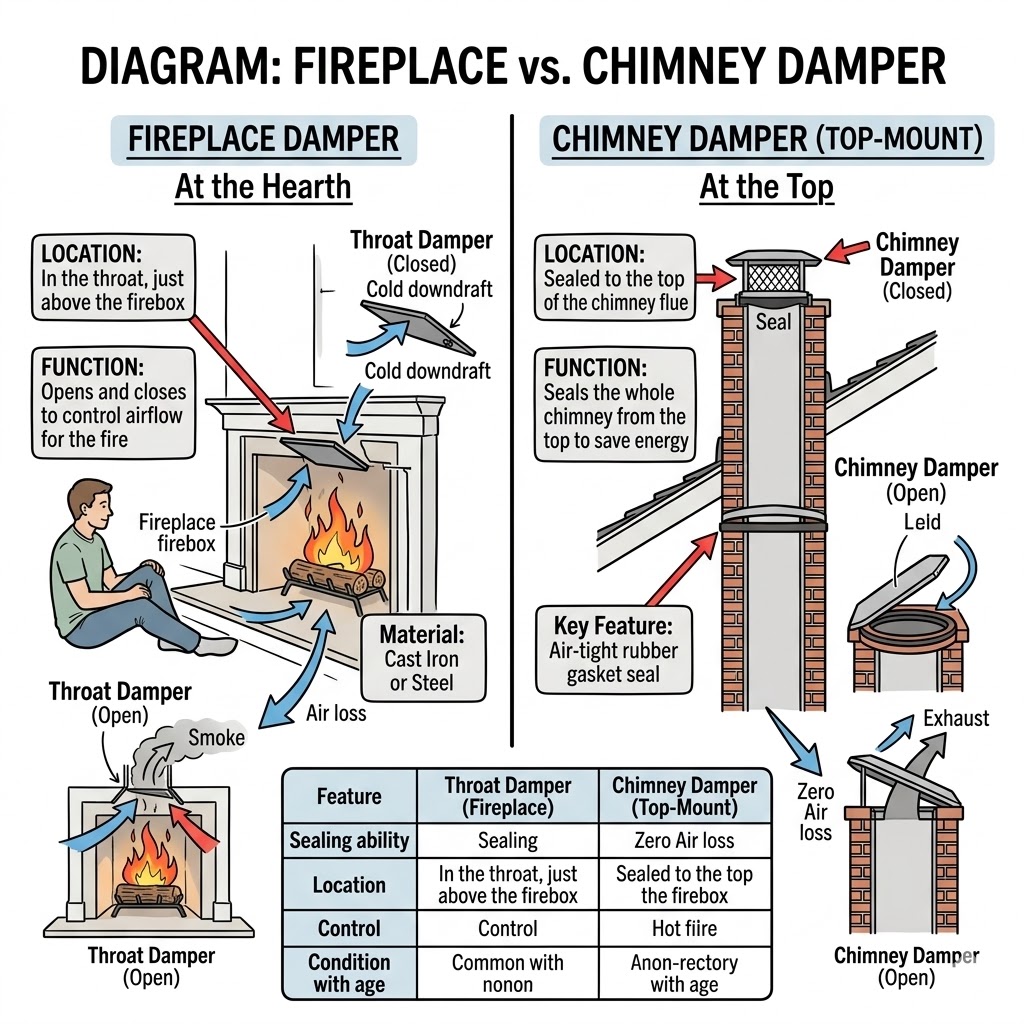 Fireplace damper (throat damper)
This is the most common style of damper. It’s located just above the firebox and is used to regulate airflow during and after a fire in the fireplace.
Operating on a pulley system that controls the damper plate, throat dampers are easy to adjust with a lever near the fireplace. When the plate is wide open, it allows for a full draft of air that’s needed to help get wood fires started. Once the fire is going, the damper opening can be narrowed to control how aggressively the wood burns.
When the fireplace isn’t in use, a closed damper prevents the exchange of air between the home and the outside world. A tightly sealed damper also helps keep chimney odors from entering the house.
Chimney damper (top-mount damper)
Top-mount dampers are installed over the flue opening at the top of the chimney. As with throat dampers, they’re operated with a pulley and handle, allowing you to control the flow of air into and through the firebox.
A function that only a top-mount damper can provide is that of guarding the flue against water, tree debris, and small animals.
Rain and snow can be major problems for chimneys and fireplaces. Incoming water can damage the chimney liner, the interior masonry, and other parts of the system.
Leaves and twigs from nearby trees can enter the flue, causing a draft blockage that could send smoke and dangerous combustion gases into your home.
Birds, squirrels, and other small animals often get into chimneys and build nests that create blockages just like tree debris. Occasionally, an animal will die inside the flue and produce a horrible odor.
A top-mount damper prevents these problems. (Note: a proper chimney cap also guards against rain, debris, and animals.)
Does your damper need servicing?
Watch for these signs that your damper isn’t working and needs to be looked at:
- Difficulty in moving the handle that controls the damper
- Outside air coming into your home; inside air escaping
- Problems getting fires started and keeping them going
- Rust and corrosion on the damper assembly
- Buildup of creosote and soot on the damper
- A top-mount damper with debris clogging the mesh
Some damper problems can be resolved with basic repair or cleaning. If either damper style is significantly damaged, it should be replaced.
Most homeowners in the Rochester, NY, and Buffalo, NY, regions add top-mount dampers when their throat dampers can no longer be repaired. But you can add a damper at the top of your chimney any time and have the dual protection of two dampers.
If you do this, remember that both dampers will need to be controlled during and after fires, and they’ll both require periodic inspections and service.
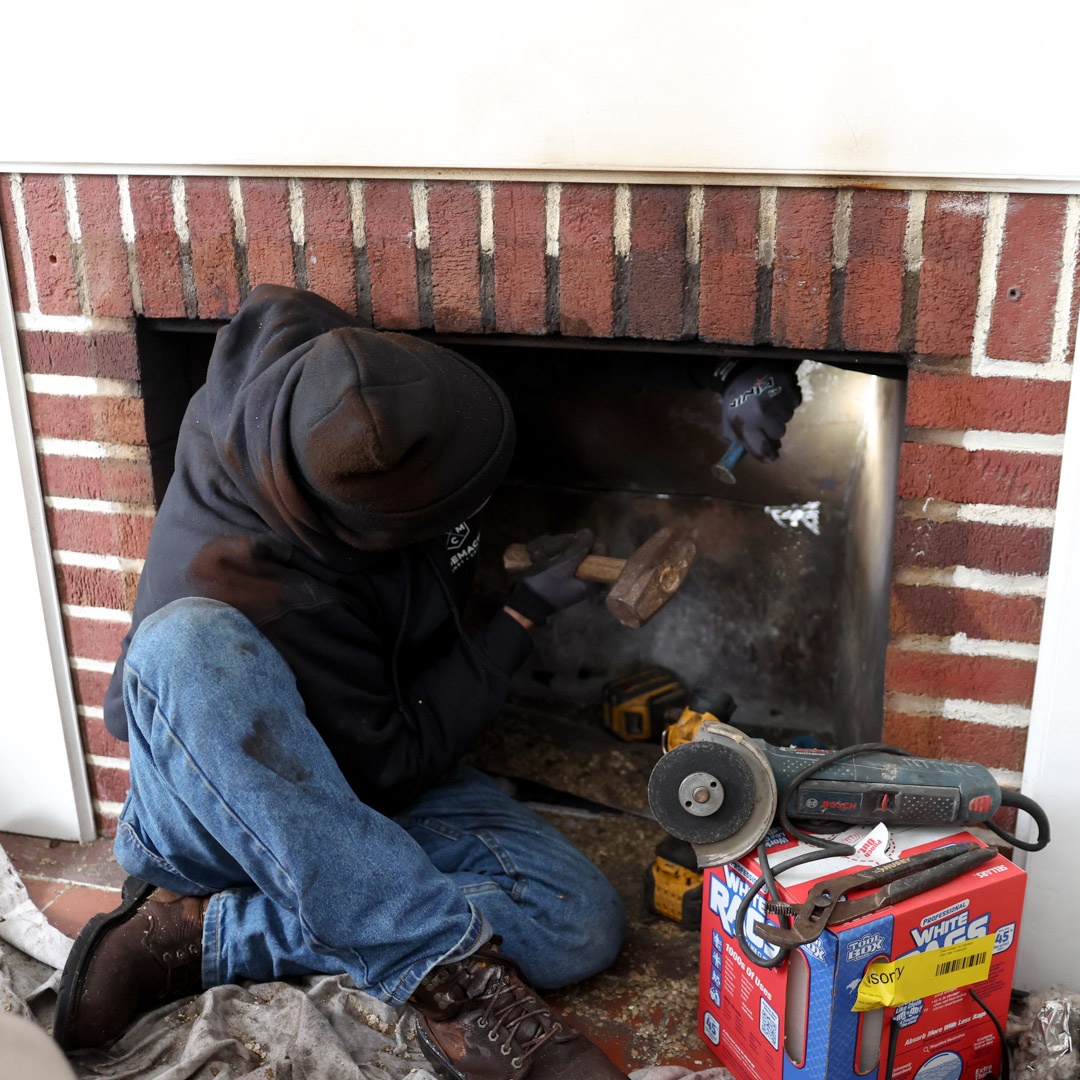 We install dampers
Felgemacher repairs and installs fireplace and chimney dampers. If you’re having trouble with either damper style or would like to add a useful top-mount damper, we’re standing by to help.
Reach a New York chimney expert by phone or via our contact form.