Are you Using your Damper Correctly?
Many homeowners don’t think about the different parts of their chimney until something goes wrong. Your damper is one of the smallest and easiest pieces to forget. But it plays a big role in controlling airflow, smoke, efficiency, and even energy bills.
Using it incorrectly can lead to smoke in your home, heat loss, and unnecessary wear on your chimney. The good news? It’s a simple component to use once you understand what it does.
 What Is a Fireplace Damper?
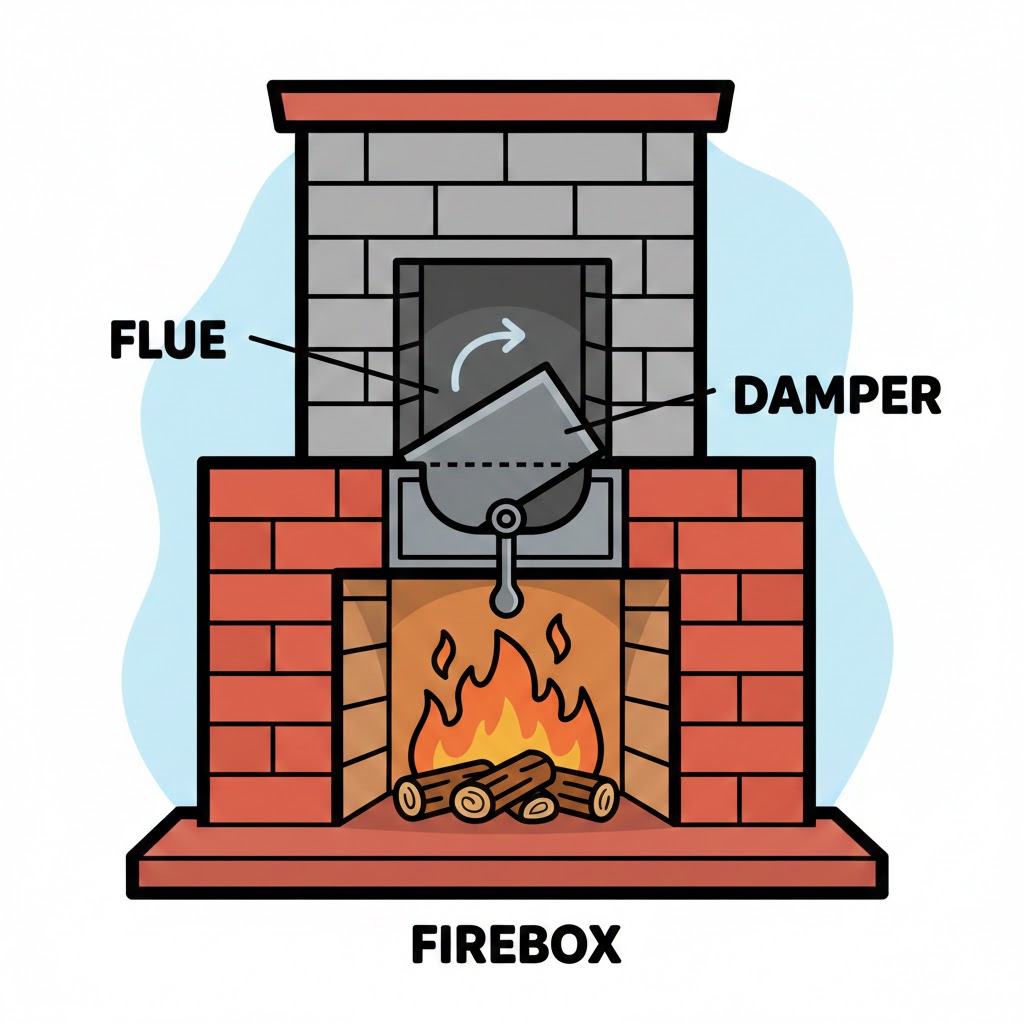
Simply put, your fireplace damper is a metal plate inside the chimney flue that acts like a door, opening and closing to control airflow. Its primary purpose is to allow smoke and gases to escape while a fire is burning. When the fireplace isn’t in use, the damper closes to help seal the chimney and prevent drafts.
There are two main types of dampers: throat dampers and top-sealing dampers. A chimney professional can determine which option is best for your particular setup.
When Should the Damper Be Open?
Your damper should be fully open before you start a fire, and it should remain open throughout the fire. After the flames die down, keep it open until all embers are completely extinguished and the firebox is cool.
If smoke begins backing into the room or your fire struggles to stay lit, those are common signs that the damper may not be open. When in doubt, you can feel for a draft or shine a flashlight up the flue to check its position.
When Should the Damper Be Closed?
Once the fire is completely out and no heat or embers remain, the damper should be closed until the next use.
This matters more than many homeowners realize. A closed damper helps prevent warm air from escaping in the winter and keeps conditioned air inside during the summer. It also reduces downdrafts and helps keep out rain, animals, and debris. An open damper is like leaving a window open all year long.
Common Damper Mistakes Homeowners Make
One of the most common issues is simply forgetting to open the damper fully before lighting a fire. Another mistake is closing it too early while embers are still hot, which can trap smoke and potentially allow harmful gases to enter the home.
Leaving the damper open year-round is another frequent oversight. This can reduce energy efficiency and increase the risk of water intrusion or unwanted wildlife entering the chimney.
Finally, skipping annual inspections can allow small damper issues to grow into larger problems. Over time, dampers can rust, warp, or fail to seal properly. Routine professional inspections help catch these concerns early.
 When to Call Felgemacher for Help
If your damper won’t move, smoke problems continue, or it doesn’t seem to seal properly, it may be time to call in a professional.
If you haven’t scheduled your annual chimney inspection, this is a great opportunity to do so. The team at Felgemacher can inspect your damper, ensure it’s functioning correctly, and help keep your fireplace operating safely and efficiently.